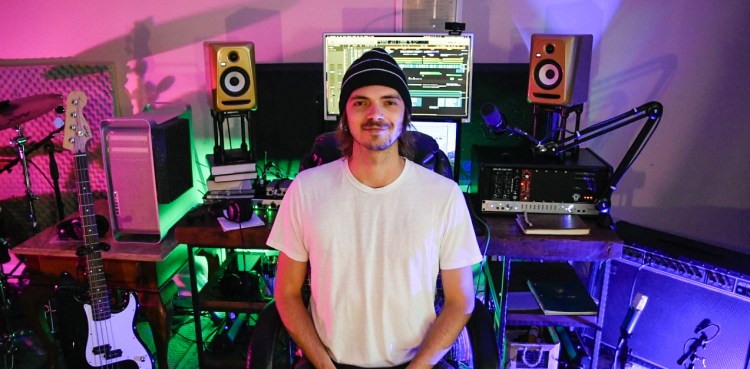
My name is Ryan Donnelly, and I am a multi-disciplinary artist with experience in audio engineering, songwriting, graphic design, video production, programming, and marketing. With this diverse skill set, I am able to create multimedia content that artfully conveys a strategic message.
My Journey
I’ve acquired a diverse skill set through having a non-linear path as an artist. As a kid, I grew up playing drums and interested in art, but in high school, all of that temporarily stopped as I became fully committed to playing sports. My athletic career brought me to the University of Richmond where I played D1 baseball, but after a couple of years, I ultimately discovered that my true passion was in creative work.
After leaving the baseball team, I redirected my energy toward learning music and video production while finishing a degree in Marketing. In my final years at Richmond, I put together a solid portfolio of multimedia projects, which got me accepted into NYU to study Music Technology. In their program, I took a range of classes spanning: Multimedia Installation Art, Virtual and Augmented Reality, 3D audio, Recording, Songwriting, Programming, and more. I then applied that wide range of knowledge toward building a one-of-kind audio visualizer system for my Master’s Thesis. (The Color Keyboard, SYNTH-esthesia, Synth Cube). During my time in New York, I also gained valuable experience working numerous jobs as an audio engineer.
After graduating from NYU, I moved back home to Delaware in early 2019 and ended up starting a band with my friends called Comet Lovejoy. Since then, the band has been a consistent creative outlet for making music and visual content. It has been a wonderful and challenging journey thus far.
Upon moving home, I also took a job as the Marketing Coordinator for Harvest Market, a local natural foods store. In that position, I created a range of content for their website, blog, social media, store displays, and weekly promotions. It was a great experience that significantly sharpened my writing and graphic design skills. Unfortunately, I wasn’t able to document the majority of the work that I did for them because I was abruptly laid off when the pandemic hit in March 2020.
Moving forward, I am looking for work opportunities to create multimedia content for other brands and business.
My Philosophy on Art
Light and sound are both powerful mediums on their own, but I believe the most impactful and memorable experiences are possible when light and sound work in together to express emotion and tell a story. For this reason, I am passionate about creating “audiovisual art” or working on the audio or visual subcomponents of larger multimedia experiences. Some of my favorite examples of “audiovisual art” include: synchronized visuals at concerts, music videos, visual music, audio visualizers, and multimedia art installations.
The Parallel Between Light and Sound
In many of my projects, I have sought to better understand the relationship between light and sound by exploring their parallels. In the physical world, light and sound actually behave quite similarly as waves. They both propagate, reflect, and refract in an environment until they are captured by a device (eyes, ears, camera, or microphone). A key difference is that sound is a mechanical wave, which must propagate through a physical medium in order to exist, while light is an electromagnetic wave, which can travel even in the absence a physical medium. This is why light can travel through outer space, but sound cannot! Light waves also propagate at a much higher frequency than sound. The spectrum of sound audible to humans is between 20-20,000 Hz while the spectrum of visible light is exponentially higher as shown in the chart below.
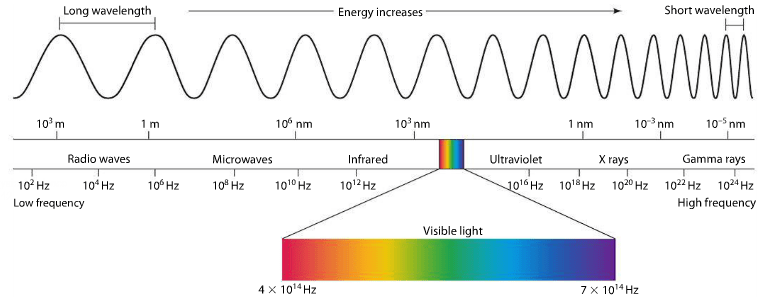
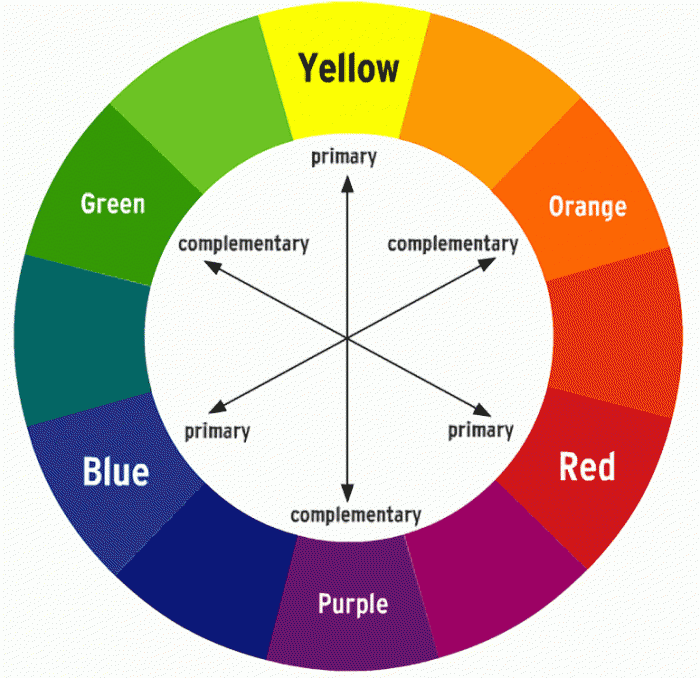
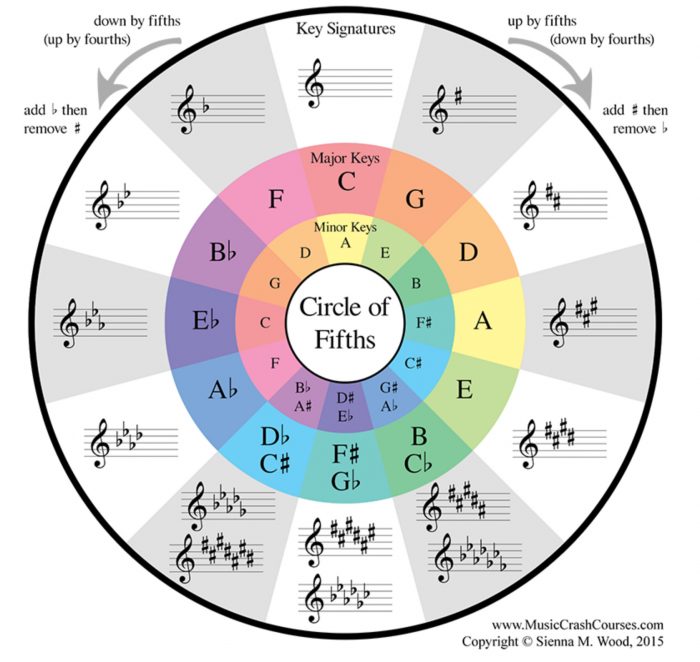
All of this nerdy stuff is meant to show that light and sound are not so different after all. In artistic applications, one similarity that I find particularly interesting is both color and sound follow harmonic principles and theories that are used to inform artistic decisions. In color theory, there are primary colors which are combined to create the secondary and tertiary colors. Certain combinations of colors that are considered to be more complimentary than others. In music theory, intervals like a 3rd or a 5th are building blocks which are used in combination to create more complex chords. Certain combinations of intervals are agreed upon as being pleasing and consonant, while others are considered unpleasant and dissonant. Overall, It is not the best one-to-one comparison, but when looking at the Color Wheel and the Circle of Fifths, it is evident that there are some strong parallels between light and sound.
Synesthesia
In exploring the connection between light and sound, a huge source of inspiration for me is the phenomenon of synesthesia, which is a neurological phenomenon that occurs when information meant to stimulate one human sense ends up stimulating several senses. There are many variants of synesthesia, but the one closest to my heart is sound-color synesthesia (also known as chromesthesia).
For those with sound-color synesthesia, auditory stimuli evokes visuals the mind of the listener, usually involuntarily. These visuals typically take the form of shapes, colors, and textures in relation to the music heard. In rare cases, people with synesthesia even experience visuals that project into their physical environment. My personal relationship with synesthesia is like having a lens which I can use to visualize music in my mind. Perhaps there is part of it that comes naturally to me, but truly, it feels more like something that I have developed and strengthened overtime by making music and studying synesthesia.
When listening to music, I tend to associate instruments with different color pallets, shapes, and textures. All of this will change slightly depending on the notes played and tone of the individual instrument. For example, notes in the higher octaves of a piano tend to appear in my mind as something similar to a frozen raindrop with whiteish blue hues and overtones of other colors. A violin typically appears as varying shades of red, pink, brown, and purple with textures ranging from cashmere to rough wool. Entire songs end up taking the form of a kinetic sculpture that evolves with layers of color and texture interacting with one another. Talking about synesthesia in this way can make it feel like a cliche or a parlor trick, but it truly love conceptualizing music in this way. Further, I believe that anyone can learn to see music in this way.
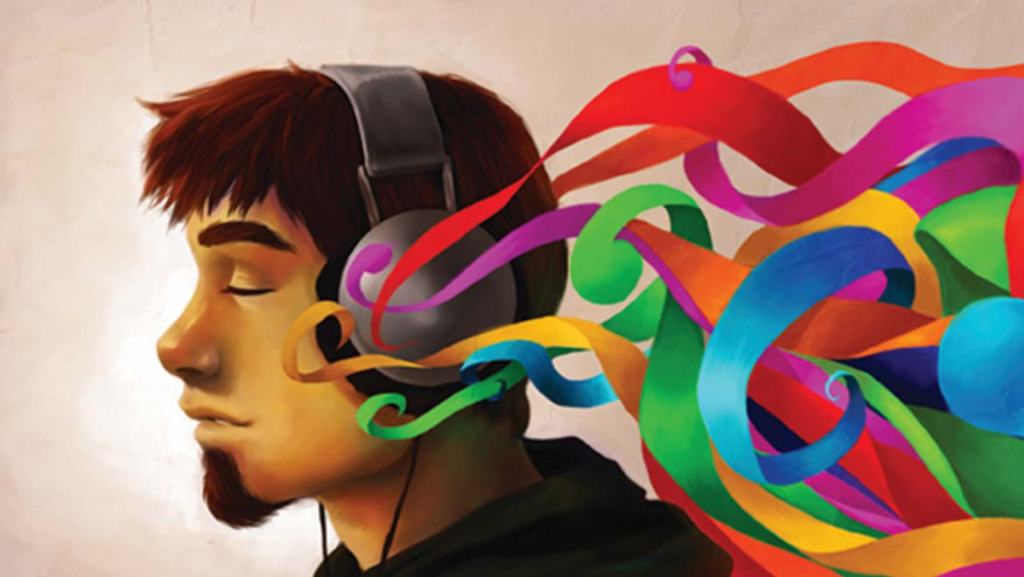
Visualizing music is truly essential to my creative process, and I find that it’s particularly useful when writing music with a specific scene or environment in mind. If I can imagine the colors and the landscape, then it is becomes easy to find the sounds and textures that match it in the composition. Producing music in this way can actually feel similar to an exercise in painting, interior decorating, and architecture.
The Bigger Picture
Truthfully, my approach to all creative work is rooted in synesthesia to some degree. I often think of one art form through the lens of another, and overall, I believe that all of the art forms are interconnected through the parallels between our senses. Music, film, cooking, painting, and architecture all have their own distinct “language” and tools for expression. Upon translating and looking a layer deeper, however, it becomes clear that all of these art forms are built on a common language of contrasting flow, texture, space, and sensation to convey emotion.
In theory, I believe that the underlying components that make for a great meal, are the same things that make for a great movie, a great painting, a great song, and so on. There is a common thread that runs through all great art, and I believe that the various art forms are simply different manifestations of the same underlying artistic principles.
A good metaphor for this is to imagine that painting is like speaking Spanish, cooking is like speaking French, and music is like speaking Italian, etc. Now if you were to study Latin, which is the foundation of these Romance languages, then you would see how Spanish, French, and Italian all operate on similar principles that originated in Latin. By knowing the underlying principles of Latin, you could then learn and understand any of the Romance languages more effectively. So to bring this metaphor full circle, I’ve spent a lot of time studying the artistic equivalent of Latin, and by understanding the underlying pillars of art, I feel well equipped to translate my creative experience across different artistic mediums.
On Storytelling and Marketing
Finally, at the heart of it all, art is built around telling stories and connecting emotionally with an audience. I believe that the success of an art project can be measured by its efficiency in communicating a message and the magnitude of the impact that it leaves with the audience. Therefore, when I’m working on a project, my goal is to always translate the desired story or message into the language of the artistic medium being used to the best of my ability.
Through my studies and experience in marketing, I have also learned how to craft stories and strategic messages with a desired impact in mind. Finally, with my experience in music production, graphic design, and video production, I am able to execute and bring ideas to life across various artistic mediums.
Thank you for taking time to read and view my website. If you have any questions or have an interest in working together, please reach out to my email: radthe5th@gmail.com
Also, in case you were curious, the “radthe5th” moniker comes from being 5th consecutive, generational member of my family to have the initials RAD. So it is a nice homage my family, and it also happens to be conveniently available as a username on most internet things!
 radthe5th